Shoe Molding vs Quarter Round: What’s the Difference?

Shoe molding (base shoe) and quarter round both cover the gap between baseboard and floor, but they are not the same profile. Quarter round is literally a quarter of a round dowel; base shoe has a square 90° back and a flatter, less circular face that sits tighter under many baseboards. Choose based on baseboard style, floor clearance, and the look you want — then nail and cope corners carefully.

You can choose two types of molding to do that depending on which one you like. These are a quarter round and a base shoe. So, are these two types of molding the same, or do they have some difference? We will cover them here in detail so that you can have a better understanding of each.
How do Shoe Molding vs Quarter Round Difference?
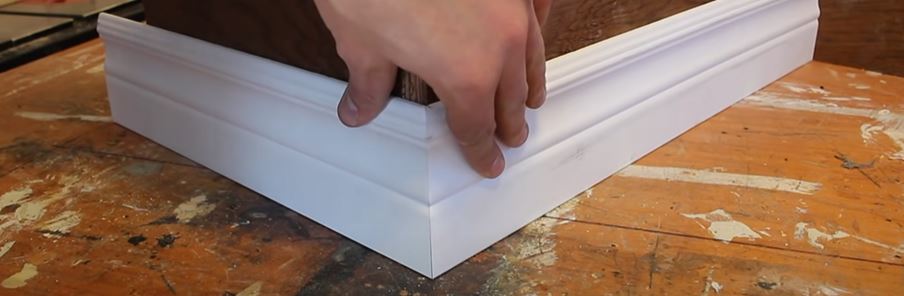
Most people confuse shoe molding and quarter round because they look similar, and you can also use them interchangeably. However, they are different and easy is suited for a specific use.
Looking for ready-made plans? You can browse the TedsWoodworking plans library (affiliate link), a third-party plans library that, per its vendor, is searchable by project type and includes cut lists. It is not affiliated with Ted Wood Plans.
For instance, a quarter round looks like just how its name implies. It is simply a round dowel cut in one quarter. You can find quarter rounds in various sizes, which makes them ideal for different applications. Additionally, they offer versatile applications and great for eliminating molding and trim gap, and filling corners.
On the other hand, the base shoe features a 90-degree backside angle, but its front base is more square. The front doesn’t resemble the circle radius like in the quarter round.
Shoe Molding vs Quarter Round – What Exactly Are They?
Let us have an in-depth analysis of these two moldings and find out what they are and how to use them.
Shoe Molding
It is a trimming that is mostly used near walls and baseboards. Shoe molding is also called a base shoe, and it is a thin and small strip that offers your room a nice finished look. It looks like the quarter molding, only that it has a bent edge. You can use shoe molding to get a smooth transition amid materials on adjoining walls and the floor.
The most outstanding thing about shoe molding is the less pronounced curve, and you can get it in ½ inch width. It gives your room a decorative touch covering all the gaps between the floor and the baseboard.
Quarter Round
Quarter molding can also be used as shoe molding. It would be best if you placed it beside fixed places like walls and baseboards. Quarter round molding pieces close the space between the adjoining walls and the floor. Additionally, you can also use it for backsplashes and countertop surfaces.
The majority of quarter round molding is made from extruded plastic, softwood, hardwood, and engineered wood. They feature a curved shape and edge hence resemble a circle cut in ¾. The curved edge faces the outer part, and it is seen when you install it. You can choose to leave the pieces as they are or choose to paint or stain them.
Quarter round pieces come in long pieces around 7 feet, so you need to cut them in the required sizes before installing them.
An Overview of Shoe Molding vs Quarter Round
Similarities
There are some similarities between a quarter and shoe molding because they are both used to give flooring and countertop installations a professional look. The two work well on various materials like laminate, wood, and concrete. Additionally, they are either made of solid wood or wood veneers.
See also What is a 1/2 Face Cord of Wood? [Know Everything This]Another similarity between the two is that you can choose to do painting or let them remain as they are. It all depends on the final look you need. You will also get them in standard sizes, and their widths are less than an inch. With that feature, it is easy for both of them to be cut easily to customize your requirements.
Differences
While they have similarities, the two also have their differences. You can find both with bent edges, but the curves are of different sizes. It makes a big difference between the two. If you need a perfectly rounded edge, consider quarter round.
This type of molding is great for tight spaces with a shape that has visual aspects. Quarter round is also great for window casings and door frames. They come in handy if you need some decorations because they have a nice circular shape.
Shoe molding makes a perfect option if you still want the curves but are less pronounced. It is great for filling gaps amid steps and other places that require ab obscure trim.
How to Install Shoe Molding and Quarter Round Molding?
Knowing how to install quarter round molding and shoe molding the right way is essential for that professional look. The right installation of both enhances the general appearance of your room. They work well in closing the gaps to give your room a professional and neat look.
Installing them is easy and quick if you have the right woodworking tools. We have a detailed step by step guide on how you can install them.
Get your Tools
The first step is to get everything that you need for the installation process. Please make a list of the tools you need and have them within reach. Installing the two doesn’t require a lot of tools. It would be best if you had the following:
A miter box
A saw
Utility knife
Pneumatic nail gun
Nails
Measuring tape
You might also want to give your molding a professional look. In this case, you need to get some home improvement tools like the following:
Caulk
Pain
Nail setter
Nail crayon
Varnish
Remove the Initial Molding
It would be best if you also prepared your new molding before installing the baseboard. Please take the right measurements and then cut it to the desired length. However, you should apply their surfaces with a finish. Take the new molding pieces and sand them lightly. Replace every piece on the sawhorse set to match your floor molding. You can now do the finishing job with several varnish coats.
Cutting Molding Pieces
Take your room measurements with a tape measure that you want to install any of the two moldings. Write the measurements down and ensure you take them from one corner to the other. This is essential because it will enable you to get the right figure and determine the amount of molding you require to buy. After that, you can cut the required pieces into small sizes.
A room can either have inside corners or outside corners, even though it is the most common. When working on the corners, you need to do a cope cut. Once you get all the cuts, start by sanding the edges. This makes your work easier because you can fit them against other structures perfectly. Alternatively, you can choose to miter ends of the material.
See also Wood Putty Vs Wood Filler [Ultimate Key Differences]If you want to cut a corner’s outside, miter the ends of two moldings. The molding’s back section needs to fit perfectly on your wall’s measurements while remaining the shorter miter side. Add some drops of glue if you would like the joint to be firmer.
Sometimes you might find that the baseboards do not come up with 45 degrees at their meeting point. What should you do? In this case, you should cut slanting outside corners at 22.5 degrees.
Lastly, if you have a longer wall and a single molding piece is not enough to cover from one corner to the other, you can cut some mid-run joints. It would help if you also mitered both ends at a 45-degree angle in a contrasting direction such that the pieces can overlap.
Installation and Creating Returns
Keep the molding, and then use a pneumatic nail gun to nail it down. Ensure that the nail goes right at the center so that no cracks take place. It is also great to leave one or two feet distance from one nail to the other.
Another thing you should be careful about is how and when you should make returns. Outline returns refer to the ends that indicate when the molding will meet some corners or even the door. There are several options you can pick for the return you want for your room. They include the following:
Mitered returns– These are the most common and easy to make miter returns.
Bullnose returns– The returns require several tools to make them, so the most complex to achieve.
Wrap around– You can also choose a wraparound if you don’t want a return. In this case, you use a molding warp that will go around the doorway to extend the path to the next room.
Finishing Touches
You can add the finishing if you want to get a slicker look. You can do this by adding some more nails, and there are no caulk gaps. It is great to use a nail crayon to hind the nails. After that, you can stain or paint the molding to give it the best look. When it is dry, you can now rest since your work is complete.
Baseboard Styles to Choose
Plain Baseboard
They refer to the common molding that you will find in already existing profile patterns. You can either go for stained or painted models. You can find these baseboard styles stained, unlike painted in most cases, because they don’t have a grain design.
Vinyl Baseboard
Many homeowners go for vinyl baseboards because it provides versatility compared to other types. It is easy to cut and miter the baseboard and assemble it according to your needs. Installing a vinyl baseboard is also pocket-friendly and an easy task.
Back-Profiled Baseboard
You can also choose the back profiled baseboard style, which is also referred to as the back out baseboard style. This type of baseboard features a cut-out to cover your wall’s lower part close to the floor. These cut-outs fit the midway section over the original molding to give a stacked visual impression.
Baseboard Profiles
You will find a wide range of profiles you can find. It is recommended to select a reliable profile that will provide many years of use. It is easy to get a customized look if you stack the profiles together perfectly.
Major Trims
Lastly, you can also choose the major trim profiles. You will find so many baseboard profiles that vary in their patterns, sizes, and shapes. The common options you can choose include the following:
Sculpted mid-height trims.
Sculpted taller molding.
Stepped baseboards.
Flat baseboard molding.
Additionally, have some extra materials that you will require to make miter cuts for the outside corners. Prepare your working space and ensure there is no dirt or dust. Also, remove the old material with a utility knife, eliminating the caulking and smooth the edges.
Place the cut pieces along your wall and keep them where they will end up once you finish the installation. Mark the corners and use a miter saw to cut corners. Remember to wear goggles when using a miter saw. Attach the baseboard using an adhesive and sand the sharp edges. Next, apply some caulk along the top and the bottom for sealing purposes.
Final Verdict
Do I require baseboard molding? This is a common question among many people, and the answer is yes. Molding makes your house look nice and neat because it closes all the gaps left between the trim and the flooring. Additionally, baseboard molding covers up the gaps and prevents dirt and dust from settling in these gaps.
To give your house an attractive and appealing look, you can choose shoe molding or quarter round molding. At this point, you can tell that there are a lot of similarities between shoe molding and quarter round molding. There are also several differences we have covered to help you understand how the two differ. However, you can easily replace each with the other.
Frequently Asked Questions
No. Both cover the gap between baseboard and floor, but the profiles differ. Quarter round is a quarter of a round dowel; base shoe (shoe molding) has a square 90° back and a flatter face that sits tighter under many baseboards.
Install shoe molding or quarter round to cover the gap, and use caulk at trim joints before paint for a clean seal. Painter’s tape along the floor helps keep caulk lines tidy while you fill small remaining gaps.
Quarter round is commonly about ¾ inch in profile and often sold in long sticks (around 7 feet or more) that you cut to length. Shoe molding is typically a thinner strip—about ½ inch width—with a less pronounced curve.
Wear safety gear, score the caulk line with a utility knife, then carefully pry the molding with a trim puller. Pull remaining nails with pliers so you don’t tear the baseboard or floor finish.
Coping gives a tighter inside corner when walls aren’t perfectly square. Cut an inside 45° on the miter saw, then use a coping saw to follow the profile along that miter line so the coped piece butts cleanly against the adjoining molding.
Related posts:
- Wood Putty Vs Wood Filler [Ultimate Key Differences]
- What is a Dust Extractor: Know All About Dust Extractors
- Can You Paint Over Manufactured Wood? Ultimate Guide 101
- What is a 1/2 Face Cord of Wood? [Know Everything This]
This page contains affiliate links. If you buy through them, Ted Wood Plans may earn a commission at no extra cost to you. Affiliate disclosure.